


Global agricultural commodity markets closed the week with mixed performance as market participants weighed improving supply prospects across major grain-producing regions against lingering structural constraints within key soft commodity markets. While favorable weather conditions and strong crop progress continued to pressure oilseed prices, supply concentration, weather-related risks, and inventory dynamics remained key drivers across cocoa and other export-oriented agricultural commodities.
Spot soybean values remained under pressure as favorable weather conditions across key U.S. growing regions reinforced expectations of a well-supplied market. Improved rainfall patterns, strong planting progress, and healthy crop development supported expectations of increased production, contributing to softer physical market sentiment. Market participants also continued to monitor Chinese procurement activity and global trade flows, as demand expectations remain an important determinant of near-term pricing direction.
In contrast, cocoa markets maintained a relatively firm tone despite signs of improving supply conditions. While recent reports indicate improving mid-crop development across parts of Côte d’Ivoire and Ghana, weather variability, disease concerns, and historically tight inventory levels continue to support market fundamentals. Although global inventories have shown signs of recovery, market participants remain cautious given West Africa’s dominant role in global production and the sector’s continued exposure to climatic disruptions.
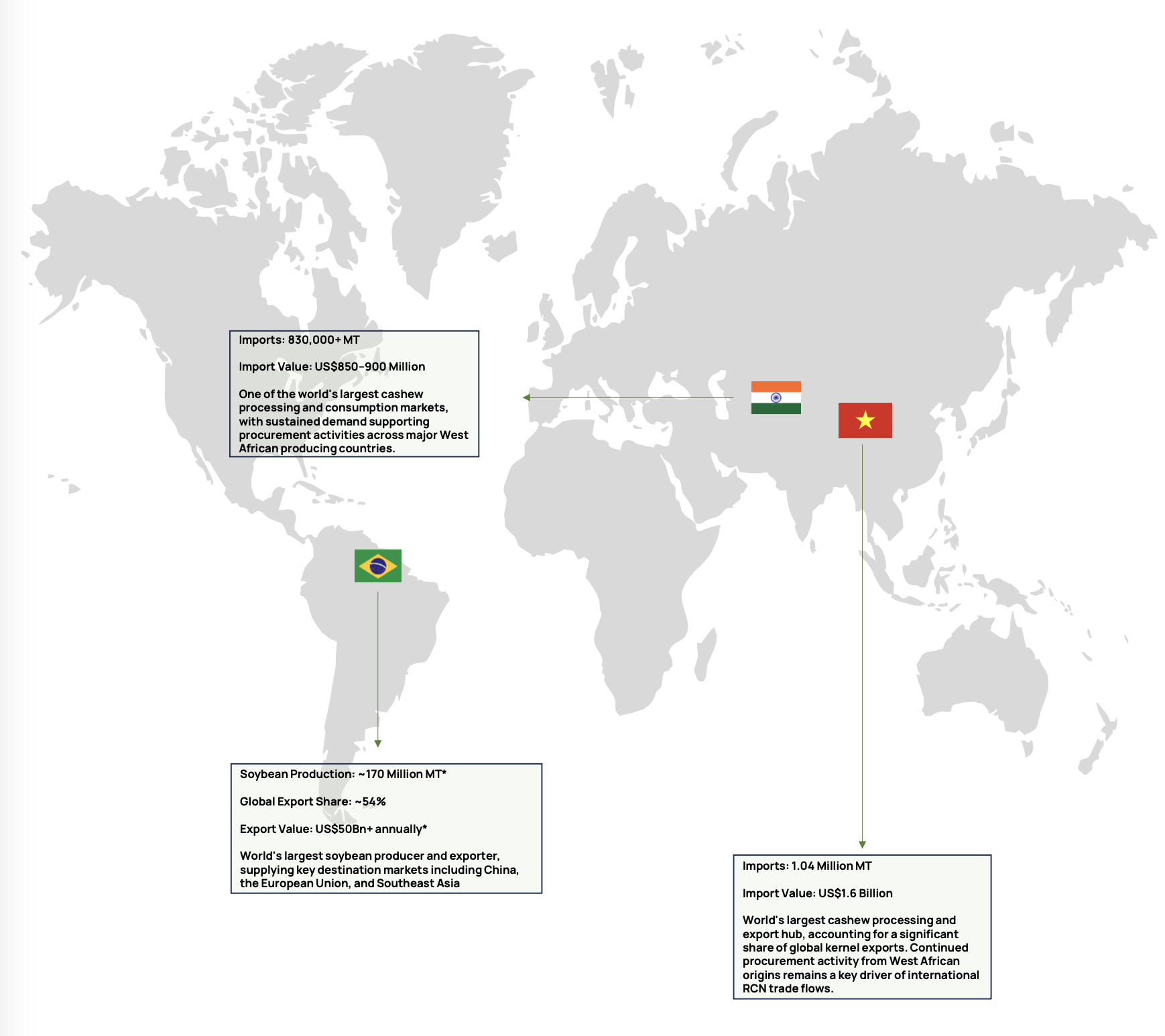
The raw cashew nut (RCN) market remained broadly stable during the review period, supported by sustained procurement activity from major processing hubs in India and Vietnam. Supply availability across several West African producing countries remained relatively tight, helping to maintain firm spot indications despite moderate trading activity. The continued concentration of processing capacity within Asia remains a defining feature of the global cashew value chain, with procurement trends in these markets continuing to influence international pricing dynamics.
The dried hibiscus market remained relatively balanced, with stable export demand supporting prevailing price levels. Market activity remained largely driven by export demand and availability from major producing regions. Overall, the week reflected a market characterized by diverging fundamentals.
While expectations of stronger grain and oilseed supply weighed on soybean values, soft commodities such as cocoa and cashew continued to derive support from structural supply considerations and concentrated production dynamics.
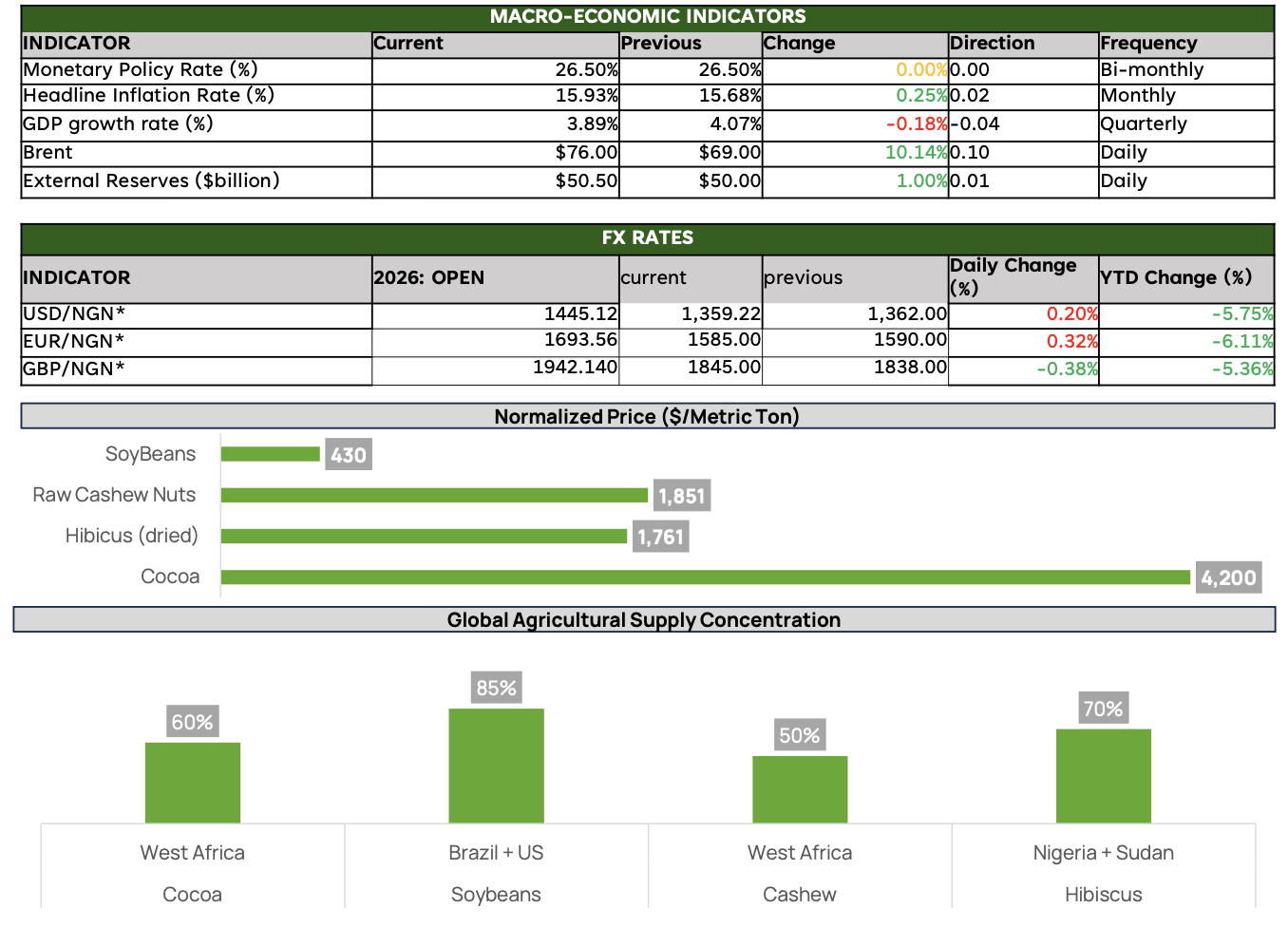
Global agricultural trade remains highly concentrated within a handful of strategic production and processing hubs. West Africa accounts for approximately 65–70% of global cocoa production and remains a key supplier of raw cashew nuts, while Vietnam and India dominate downstream cashew processing and value addition.
In the soybean market, Brazil and the United States account for roughly 85% of global export volumes, reinforcing their influence on global supply dynamics. Meanwhile, Nigeria continues to play a significant role in the international dried hibiscus trade. The concentration of supply and processing capacity across a limited number of markets highlights the importance of these trade corridors in shaping global commodity flows, pricing trends, and supply chain resilience.
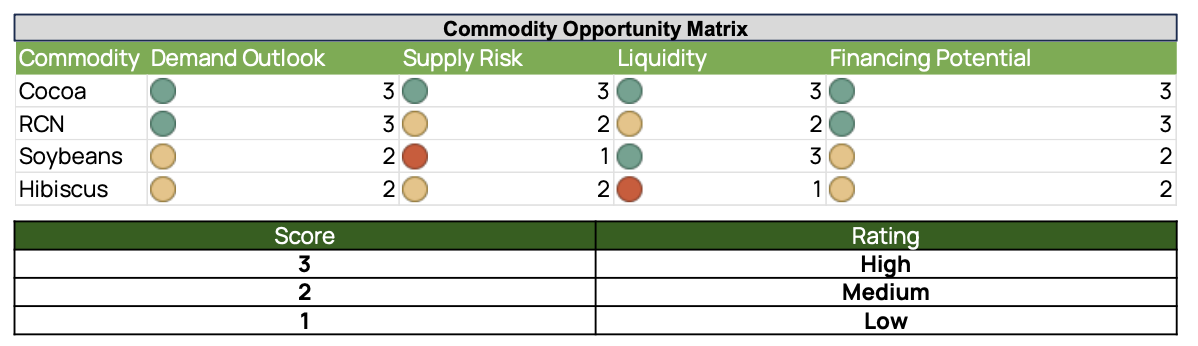
The Commodity Opportunity Matrix provides a high-level assessment of key agricultural commodities based on prevailing demand conditions, supply-side risks, market liquidity, and potential financing activity across global value chains. The framework is designed to identify areas where market fundamentals and trade flows are most likely to influence transaction volumes, working capital requirements, and investment activity.
Current market conditions indicate relatively strong opportunities within the cocoa and raw cashew nut sectors, supported by resilient international demand, concentrated supply structures, and sustained procurement activity. Soybeans continue to benefit from deep market liquidity despite improving supply expectations, while the dried hibiscus market remains broadly stable, supported by consistent export demand and established trade channels.
Overall, global agricultural markets continue to navigate a complex environment shaped by shifting supply fundamentals, evolving demand patterns, and weather- related risks.
While improving supply conditions are beginning to ease pressure in some commodity segments, structural constraints across key export-oriented value chains continue to influence market sentiment and pricing dynamics.
Against this backdrop, market participants are expected to remain cautious while looking for opportunities, balancing procurement strategies against market risks and new trade opportunities.